Custom Logo T-Shirts Wholesale: What Buyers Should Know
Ordering custom logo t-shirts wholesale involves more than choosing a blank shirt and uploading a logo. Fabric quality, printing method, logo placement, color matching, and production planning all influence the final result. A small mistake during sampling can become an expensive problem when repeated across hundreds or thousands of garments.
Whether you’re ordering uniforms, promotional apparel, or retail merchandise, confirming specifications before production helps improve consistency and reduce costly revisions.
Quick Answer: What Should You Know Before Ordering Custom Logo T-Shirts?
Custom logo t-shirts wholesale typically involves selecting the right garment, choosing the most suitable decoration method, confirming logo placement and Pantone colors, and meeting the supplier’s MOQ. The final cost depends on garment specifications, decoration method, order quantity, and finishing requirements rather than unit price alone.
Why Businesses Order Logo Shirts in Bulk
A single branded shirt costs a lot more per unit than most businesses expect, mainly because setup costs for printing or embroidery get spread across the entire order. That math changes dramatically once volume increases, which is exactly why Custom logo t‑shirts wholesale pricing exists as its own category separate from one-off custom orders.
Companies ordering uniforms for staff, promotional shirts for a trade show, or merchandise for a retail line all run into the same consideration: the logo needs to look consistent across every single unit. A print that looks crisp on the first hundred shirts but blurry on the next batch reflects poorly on the brand, regardless of how good the original design was.
This is where Custom logo t‑shirts sourcing differs from generic wholesale apparel. The design itself becomes part of the product, and getting the placement, sizing, and color matching right across a large order takes more coordination than ordering blank shirts alone.
Key Benefits
Lower cost per unit at scale. Setup costs for printing or embroidery get distributed across the full order, making each shirt significantly cheaper than a small custom run.
Consistent branding across the order. A single production batch keeps logo placement, color, and print quality uniform, which matters for professional appearance.
Flexibility in printing method. Wholesale suppliers typically support screen printing, embroidery, and direct-to-garment printing, letting buyers match technique to logo complexity and budget.
Easier reordering for future batches. Once a supplier has the logo file and specs on record, repeat orders tend to move faster than the initial setup.
Buying Guide: What to Look For
Not every supplier delivers the same consistency at volume. Here’s what actually matters when comparing options.
| Factor | Why It Matters |
| Printing method options | Screen printing suits simple, single-color logos at volume; embroidery adds a premium feel; DTG handles detailed multicolor designs |
| Minimum order quantity | Confirm the MOQ fits your actual volume needs before committing |
| Fabric weight and blend | Heavier cotton blends tend to hold printed or embroidered logos better over repeated washing |
| Logo file requirements | Ask what file formats and resolution the supplier needs for a clean print result |
| Sample availability | A supplier willing to send a pre-production sample signals confidence in consistency |
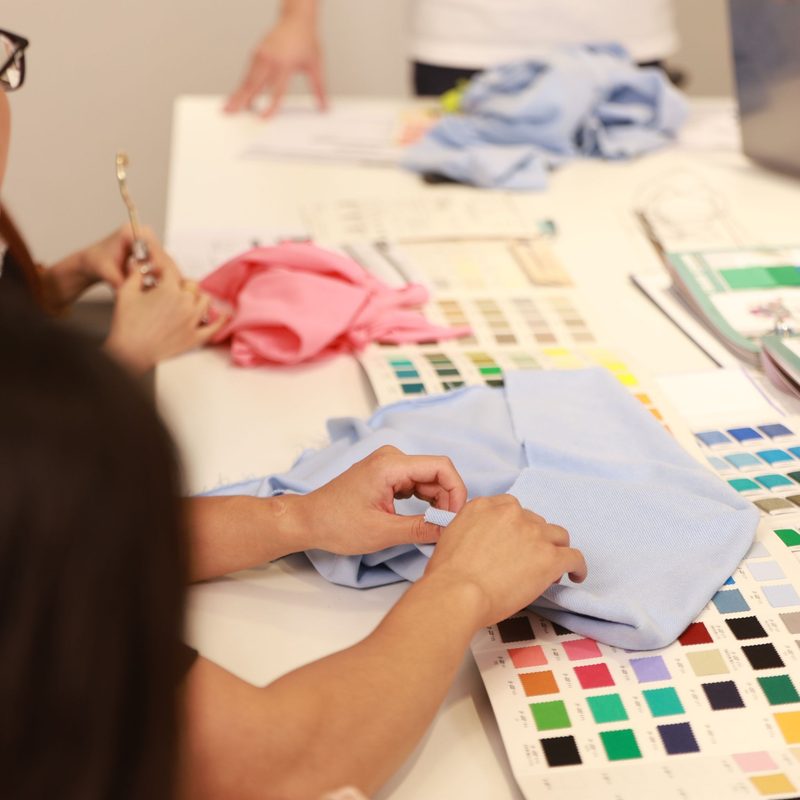
| Color matching process | Understand how the supplier matches brand colors, especially for logos with specific Pantone requirements |
| Turnaround time | Confirm production timelines separately from shipping, since both affect delivery dates |
Before requesting a quotation, prepare your logo artwork (preferably AI, EPS, or PDF), preferred garment color, size breakdown, estimated quantity, logo placement, Pantone colors if required, label requirements, packaging details, and delivery destination. Complete specifications help suppliers provide more accurate quotations and reduce production revisions.
If your logo includes fine detail or multiple colors, ask the supplier which printing method they’d recommend before finalizing your order, since not every method handles complexity equally well.
Common Mistakes to Avoid
Skipping the sample stage. Approving a full production run without a physical sample is one of the most common and costly mistakes in bulk branded apparel.
Choosing the wrong printing method for the logo. A detailed, multicolor logo printed with a method suited to simple designs often loses clarity or color accuracy.
Ignoring fabric quality to save on cost. A cheaper fabric blend can shrink or fade faster, which makes the printed logo look worn out well before the shirt itself does.
Underestimating production timelines. Custom printing and embroidery setup often add days beyond standard blank-shirt shipping estimates, especially for a first-time logo order.
Expert Tips
Send a vector file of your logo whenever possible, rather than a low-resolution image. This gives the printer the cleanest possible source for scaling and color accuracy.
Ask about the supplier’s process for retaining your logo file and specs for future orders. This saves setup time and helps maintain consistency across repeat batches.
Order a slightly higher quantity than you currently need if the logo will be reused for future runs. A reprint for a small shortfall often costs more per unit than adding extra to the original order.
Featured Category: Custom Printed T-Shirts
For businesses comparing wholesale logo printing options, Unit Hundred’s custom printed t-shirt category covers a range of fabric weights and printing methods suited to bulk branded orders. The lineup is built around the kind of consistency and volume pricing that Custom logo t‑shirts wholesale buyers typically look for, whether the order is for staff uniforms, promotional giveaways, or a retail product line.
Reviewing this category is a reasonable starting point for buyers trying to match printing method and fabric quality to their logo design and budget.
Why Choose Unit Hundred
Unit Hundred has been manufacturing apparel since 2001, providing integrated services including cutting, sewing, screen printing, embroidery, packaging, and quality control. This allows logo placement, color consistency, and garment quality to be managed through one coordinated production process.
Ready-made garments customized with printing or embroidery can generally start from 50 pieces, while fully customized garments typically start from 100 pieces per style. Standard samples usually take 3–7 working days, and bulk production generally takes 7–20 working days after sample approval.
FAQs
What’s a typical minimum order quantity for custom logo t-shirts wholesale?
Ready-made garments with custom printing or embroidery can generally start from 50 pieces, while fully customized garments typically start from 100 pieces per style.
Which printing method is best for a detailed logo?
Direct-to-garment printing generally handles detailed, multicolor logos better than screen printing, which works best for simpler, single-color designs at volume.
How much does pricing drop at higher order volumes?
Per-unit cost typically decreases at set thresholds, often dropping noticeably at 100, 250, and 500-unit tiers, though exact breaks vary by supplier.
Should I request a sample before a full production run?
Yes. A pre-production sample is one of the most effective ways to catch logo placement, color, or sizing issues before committing to a full order.
Can I order custom logo t-shirts in mixed sizes and colors?
Many suppliers allow mixed sizing within a single design’s MOQ, though this depends on the specific supplier’s policy.
Does embroidery cost more than screen printing for logo shirts?
Generally yes, embroidery typically costs more per unit than screen printing, though it often provides a more durable, premium finish for logos.
Do suppliers retain logo files for future reorders?
Many do, which speeds up future orders and helps maintain consistent placement and color across print runs. It’s worth confirming this directly with your supplier.
How long does production usually take?
Standard samples usually take 3–7 working days. Bulk production generally takes 7–20 working days after sample approval. Shipping time is calculated separately.
Can custom logo t-shirts include private labels and custom packaging?
Yes. Orders can include private neck labels, care labels, hangtags, branded polybags, barcode stickers, and customized export cartons.
What file format should I provide for my logo?
Vector files such as AI, EPS, or PDF are recommended for the best printing quality. High-resolution PNG files may also be accepted for some printing methods.
Conclusion
Successful custom logo t-shirts wholesale projects depend on selecting the right garment, decoration method, and production partner. Reviewing samples, confirming logo specifications, and approving artwork before bulk production help ensure consistent branding and smoother repeat orders.